


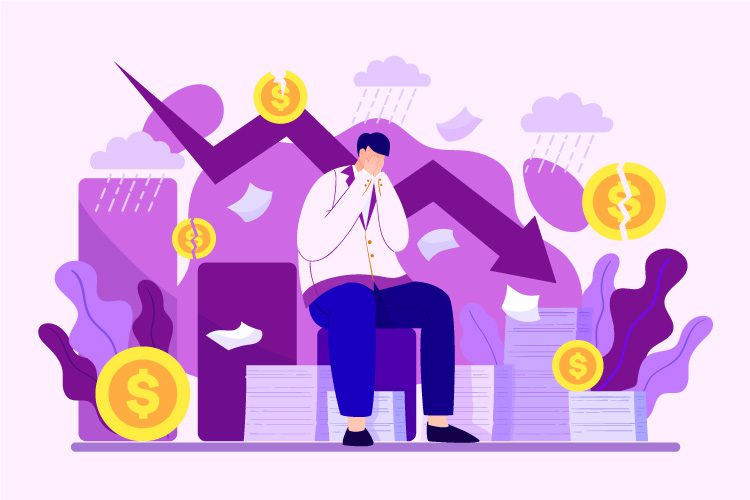
Almost every investor says one thing when they start investing — “I’m in for the long term.”
But the moment markets fall, that confidence quietly disappears.
A dip comes, portfolio turns red, WhatsApp groups get noisy, news channels scream warnings — and suddenly many investors feel an urge to exit.
So why does this happen again and again? Why do investors panic and exit during a dip even when they know markets don’t move in a straight line?
The answer is not finance. It’s behaviour.
Fear Feels More Real Than Logic
Why Do Investors Panic.
When money is growing, it feels good but calm.
When money starts falling, it feels urgent.
Even if the loss is temporary, the brain treats it as danger. That emotional reaction is the biggest reason investors panic and exit during a dip. Logic takes a back seat, and the only thought left is — “What if it falls more?”
Most exits don’t happen after deep analysis. They happen because fear becomes uncomfortable.
Daily Tracking Creates Unnecessary Stress
Many people invest for the long term but still end up checking their portfolio almost every day.
At first it feels normal. Slowly, it starts playing with your head.
When you watch prices move daily, even a small fall feels bigger than it really is. This is often why do investors panic when the market dips — not because something is actually wrong, but because they’re seeing too much, too often.
Long-term investing was never meant to be tracked daily.
Past Losses Play Tricks on the Mind
If someone has already seen a heavy fall before or taken losses in the past, that experience sticks.
You don’t forget how it felt.
So when the market dips again, the mind doesn’t think logically. It remembers the pain. That’s often why do investors panic when prices start falling.
To avoid going through that stress again, many people sell quickly. Not because it’s the right move — but because it feels safer in the moment.
News and Opinions Make Things Worse
During market corrections, negative news spreads faster than facts.
Experts predict crashes, social media shares fear, and everyone suddenly becomes a market expert. This overload confuses investors and makes them doubt their decisions.
Many investors panic and exit during a dip not because fundamentals changed — but because confidence changed after consuming too much noise.
No Clear Plan = Easy Panic
Investors who panic usually don’t have clear answers to simple questions:
- Why did I invest?
- How long can I stay invested?
- How much ups and downs can I handle?
Without clarity, even a small dip feels dangerous. That lack of direction is a major reason investors panic and exit during a dip.
A written plan gives stability. No plan creates panic.
Seeing Red Numbers Instead of Long-Term Value
When markets fall, investors see only falling numbers.
They forget they own parts of real businesses that grow over time.
This number-focused thinking makes dips look like failure instead of opportunity. That’s why investors panic and exit during a dip instead of staying patient.
What Panic Exiting Really Costs
Most investors who exit during a dip don’t stay out forever.
They usually come back after markets recover — at higher levels.
The loss doesn’t come from the fall.
It comes from exiting at the wrong time and re-entering emotionally.
That’s how short-term fear damages long-term wealth.
How to Stay Calm During Market Dips
You don’t need special skills to stay invested. You need discipline.
A few simple habits help:
- Invest based on goals, not headlines
- Stop checking portfolio every day
- Accept that volatility is normal
- Stick to your time horizon
Calm investing is not about courage. It’s about preparation.
Final Thoughts
Market dips are part of investing. Panic is optional.
Once you understand why investors panic and exit during a dip, it becomes easier to pause, think, and stay put. Wealth grows quietly for those who don’t react to every fall.
The market always tests patience before rewarding it.
Also Read this
- Budgeting for Big Goals: Buying a House, Child’s Education, and Retirement
- 50:30:20 Rule — Does It Really Work for Indian Families?
- Why You Should Buy Life Insurance in Your 20s?
- 5 Situations When Health Insurance Saved Families from Financial Ruin
- How to Rebalance Your Portfolio After Recent Volatility
- Should You Stop SIP During Market Crash? Let’s Talk Honestly
- Credit Card EMI vs Personal Loan. What Actually Makes Sense?